
The software that helps plumbing and HVAC companies get more Google reviews is more than a review inbox. It is a field workflow for service calls, installs, tune-ups, estimates, dispatch handoffs, and emergencies.
That distinction matters because plumbing and HVAC reviews are created in the home, not in a marketing dashboard. A customer calls because water is backing up, an AC unit failed, a furnace is out, or an install needs trust. The review opportunity happens after the company solves the problem.
The Cheers review generation platform is built for that service-moment workflow: neutral asks, employee attribution, branch reporting, and local visibility work around the reviews.

The field workflow matters most
For plumbing and HVAC teams, the software should fit how technicians and dispatchers already work. If the review path is buried in an email sequence or a generic customer-message inbox, adoption will be uneven.
The better workflow is simple. The eligible customer gets a neutral review path at the right moment. The request routes to the correct Google profile. The activity is tied to the employee or branch. Managers can see who is asking, where review velocity is weak, and which service lines lack recent customer language.
Google says businesses can ask customers for reviews and provide a review link. The same operating rule still applies: no pressure, no incentives, no asking for a specific rating, and no selective asking.
What the software should cover
A plumbing or HVAC buyer should look for five capabilities:
- Fast review paths that work after real service.
- Employee and branch attribution without creating rating quotas.
- Profile routing for the correct location or service market.
- Manager views for adoption, review velocity, and response quality.
- A connection from review language to local pages, profiles, and AI visibility.
That last point is easy to miss. More Google reviews help most when they describe the actual service buyers search for: AC repair, drain cleaning, sewer backup, furnace replacement, heat pump service, water heater repair, emergency response, cleanup, punctuality, and clear explanation.
Review Generation Software With Employee Attribution goes deeper on the attribution layer. Best Review Management Software for Home Services Companies covers the broader vendor evaluation.
The software shortlist usually splits into four categories: messaging and reputation suites, multi-location local marketing suites, field-service CRM add-ons, and service-brand review generation platforms. The best fit depends on where the review moment should live. If the customer relationship is mostly inbox-led, a messaging platform may fit. If the review moment is created by technicians and branch managers, the platform needs attribution, routing, and local visibility reporting rather than review alerts alone.
Plumbing and HVAC are not identical
HVAC often has seasonal peaks, planned maintenance, replacement estimates, financing questions, and emergency calls. The review program should separate AC repair, furnace service, heat pumps, installs, tune-ups, and emergency response so managers can see which service lines have proof.
Plumbing is usually more urgent. Drain cleaning, sewer backups, leaks, water heaters, and emergency calls are chosen fast. A branch can have a strong rating and still look weak for a specific urgent job if recent reviews never mention it.
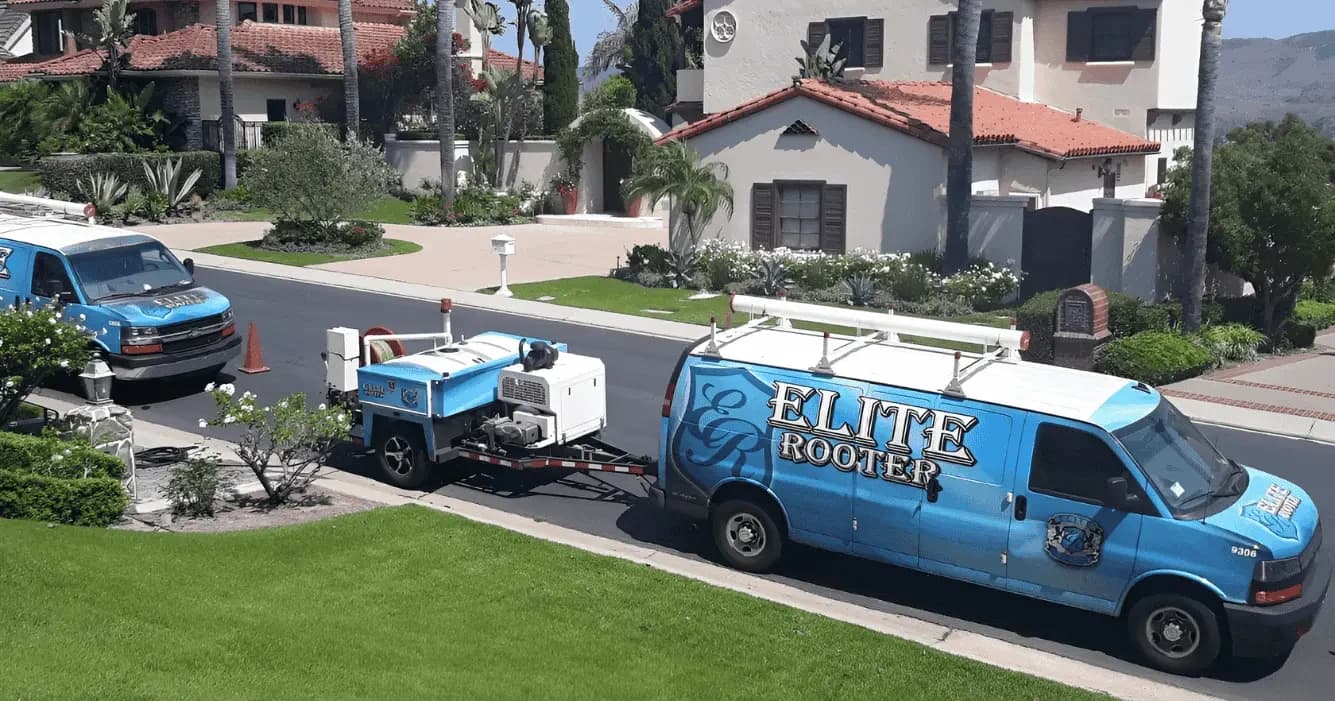
Elite Rooter is the plumbing proof example: its connected Google review base grew 17.4% in just over eight months across 12 local markets, and the Elite Rooter case study documents the field workflow behind that growth. The Sierra case study shows the HVAC and plumbing version of the same program holding a 4.9 rating at scale.
How to compare vendors
Walk each vendor through a week from your own dispatch board: an emergency call, a replacement estimate, and a routine maintenance visit, handled by a veteran technician and a new hire in branches at opposite ends of the adoption curve.
Ask how the software handles the same questions: how does the customer get the review path, how is the employee connected to the request, what happens if the customer writes later, how does the manager see adoption, how does the system avoid policy risk, and how does review language feed local visibility work?
For plumbing and HVAC buyers, the final test is concrete: choose software that helps the field team create more legitimate Google reviews and helps managers improve the behavior behind them.
If you want to test this against your own service calls, book a Cheers demo with one HVAC market, one plumbing market, and the branches where review velocity is weakest.
Sources
- Google Business Profile Help: get more reviews. Supports the guidance that businesses can ask customers for reviews and share a review link.
- Google Business Profile Help: read and reply to customer reviews. Supports review response and review-management workflow basics.
- Google Maps user-generated content policy: fake engagement and conflict of interest. Supports the policy guardrails around fake reviews, incentives, and manipulation.
- Podium reviews tool, Birdeye Search AI, SOCi Genius Search, Uberall, and Yext Listings. Official sources used for platform-category context.
- Sierra case study and Elite Rooter case study. Support the public plumbing and HVAC proof examples.
Dylan Allen-Arnegård is the CEO & Co-Founder of Cheers, the done-for-you platform that manages the website, reviews, listings, structured data, and local content that get service businesses recommended across Google, Maps, ChatGPT, and Perplexity.