

Google's own guidance on hiring SEO help, last updated June 5, 2026, now lists "Optimizing for generative AI" among the services agencies provide. Every shortlist below sells that line. The question a multi-location operator has to answer is which of them will still be there on a Tuesday when one branch's profile drifts and nobody has noticed.
Last verified: September 2, 2026.
The best local SEO agency alternative depends on the work that is actually failing. Scorpion, 1SEO, CAMP Digital, and RYNO are broad home-service marketing partners built around websites, SEO, paid media, lead flow, and reporting. Cheers is narrower: it manages the reviews, local pages, listings, structured facts, AI citations, and branch-level work that help each location get found and recommended.
That makes the comparison more useful than calling every option an SEO agency. A brand that needs advertising and lead generation should evaluate a full-service agency. A brand that already has demand but lacks review velocity, local proof, AI cited-source tracking, and an owner for every market should evaluate Cheers.
Channel eligibility still needs independent review. Apple's current Maps advertising policy prohibits home-services ads, so a full-service proposal should not count that inventory as available without a documented policy change. The Apple Maps ads guide for home services covers the current boundary.
Google still matters to both models. Local ranking is shaped by relevance, distance, and prominence, and complete business information helps Google match a business to relevant searches. On the review half, Google's local ranking page is unambiguous: "More reviews and positive ratings can help your business's local ranking." Google's AI Search guidance also points back to normal Search foundations: useful content, crawlable pages, good user experience, accurate business details, and structured data that matches visible content.
Important
The best alternative to a local SEO agency is not "software instead of services." For a multi-location service brand, the better model is a done-for-you operating loop that connects reviews, locations, sources, and frontline behavior.
If you want to pressure-test that model against one market or acquisition cluster, use the demo action below with the actual locations, services, and prompts you care about.
The short answer
Hire an agency when the work is a defined SEO project: site migration, technical cleanup, local page architecture, content planning, analytics setup, or a campaign that needs a specialist.
Use software when your team already has the operators to turn alerts into work. Software can show listings gaps, rank changes, review trends, or AI visibility misses. Software alone does not guarantee that field teams, content owners, and regional managers will complete the next fix.
Use a done-for-you local visibility platform when the work has to happen every week across locations. For a PE-backed HVAC group, plumbing brand, restoration rollup, garage door company, or franchise service system, the real question is not "who can write a page?" It is "who will notice the market is weak, identify the source gap, assign the work, and verify the next run?"
Agency alternatives
Published scope by partner
A source-linked summary of what each company publicly centers. Confirm the current proposal, delivery team, and ownership model directly.
| Platform | Pricing |
|---|---|
| Scorpion | Custom; confirm current scope and term |
| 1SEO (now part of Scorpion) | Custom |
| CAMP Digital | Custom |
| RYNO Strategic Solutions | Custom |
| Cheers | Visibility $750/mo for up to 3 locations; Managed from $3,000/mo, priced to scope; bigger brands by contract |
Pricing: Custom; confirm current scope and term
Best for: Home-service companies seeking a broad growth partner for websites, SEO, paid media, lead tracking, and revenue reporting
Strengths
- Full-service home-services specialization across websites, SEO, advertising, and lead conversion
- RevenueMAX includes Reputation AI for review collection, response, analysis, and showcasing
- RevenueMAX and Ranking AI connect marketing activity to leads and revenue
Tradeoffs
- Broader acquisition scope than a dedicated branch-level AI-source operating program
- Buyers should verify technician-level attribution and weekly source-fix ownership in the proposed scope
Pricing: Custom
Best for: Local businesses seeking integrated SEO, paid media, websites, creative, and marketing reporting
Strengths
- Broad channel coverage with ServiceTitan, Google Ads, Analytics, CallRail, and Meta reporting integrations
- Home-service strategy spans SEO, PPC, social, email, creative, and reputation management
Tradeoffs
- Scorpion acquired 1SEO in June 2026, so buyers should confirm the current service and platform model
- AI cited-source tracking and employee review attribution are not central to the public positioning
Pricing: Custom
Best for: HVAC and home-service companies that want SEO, paid search, websites, and marketing spend aligned to technician capacity
Strengths
- AtCapacity connects lead generation and spend to operational demand
- Public offering covers AI and search optimization, paid search, SEO, websites, and attribution
Tradeoffs
- The public offer centers lead flow and capacity more than field review generation
- Employee attribution and AI cited-source operations are not publicly positioned as core capabilities
Pricing: Custom
Best for: Contractors seeking full-funnel digital marketing, ServiceTitan-connected reporting, and marketing-operations alignment
Strengths
- Broad home-service offering across websites, SEO, paid media, video, email, social, and CSR coaching
- RYNOtrax provides rollup reporting by brand, region, and location, and clients own the website assets
Tradeoffs
- The operating model is broader than review-led local and AI visibility
- AI cited-source tracking and employee review attribution are not central to the public positioning
Pricing: Visibility $750/mo for up to 3 locations; Managed from $3,000/mo, priced to scope; bigger brands by contract
Best for: Multi-location service brands where the gap is weekly execution, not awareness
Strengths
- Owns the loop: website, reviews, listings, structured data, and local content, measured and managed by market
- Review generation and attribution run with the field team
- Branch-level scoreboard managers actually use
Tradeoffs
- Not a technical SEO agency: site rebuilds and migrations are scoped as a separate website project
- Built for service brands, so other verticals fit less well
Choose by the job
- You need websites, paid media, and broad lead-generation execution: Shortlist the full-service agencies
- Your priority is capacity-aware advertising and booked-call growth: Compare CAMP, RYNO, Scorpion, and 1SEO's current Scorpion model
- Reviews, local proof, AI citations, and branch ownership are the gap: Prioritize a partner with documented branch-level execution
This comparison was authored by Cheers from official public positioning reviewed in July 2026. It summarizes public scope rather than scoring delivery quality. Scorpion acquired 1SEO on June 18, 2026. Confirm every vendor's current proposal, team, capabilities, and contract directly.
Scorpion announced the 1SEO acquisition on June 18, 2026: "Scorpion, the leading provider of digital marketing and technology solutions for local businesses, today announced it has acquired 1SEO Digital Agency, a Philadelphia-based digital marketing agency founded in 2009." The table keeps separate rows because buyers may still encounter both brands and service models during the transition, but a current proposal should clarify which Scorpion platform, contract, and team will own the account.
This is not a claim that the agencies are bad at the jobs they sell. Their public offers cover websites, paid media, lead generation, and revenue reporting. The distinction is operating focus. Cheers belongs on the shortlist when the hard problem is creating policy-compliant review opportunities, attributing them to employees and branches, tracking cited sources, and assigning local fixes every week. A full-service agency belongs on the shortlist when the buyer needs a broader acquisition program that includes advertising.
For buyers comparing that model with a broad reputation platform, Birdeye Alternatives & Competitors lays out the tradeoff and each vendor's published price.

That is where Cheers' multi-location local SEO platform should be evaluated: not as a generic SEO retainer, but as a system for local visibility work that depends on operations.
The owned site is where the citations land
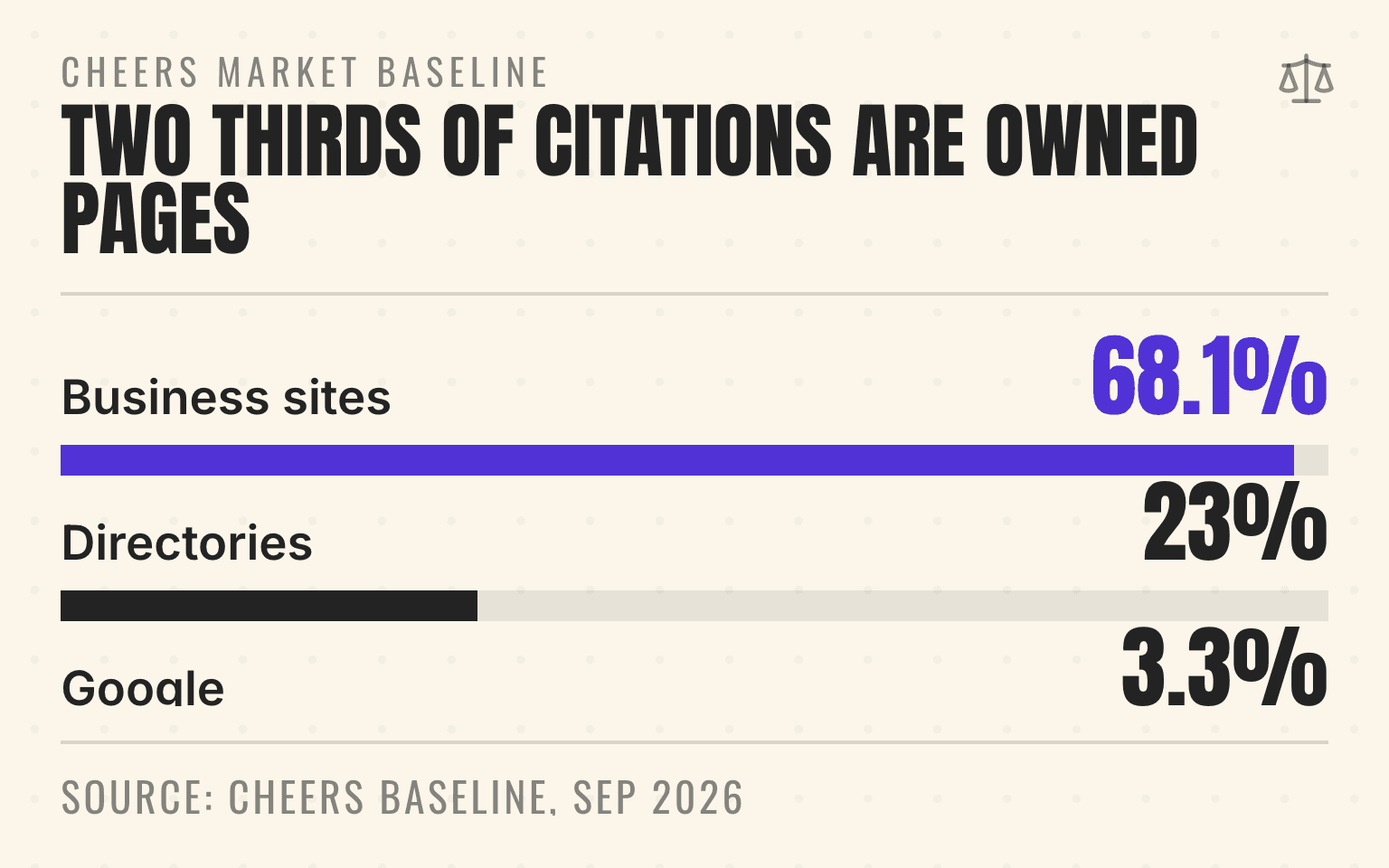
Cheers runs a market baseline that is not a customer: 32 natural-language home-services prompts executed in 100 metro service areas across four engines, producing 356,019 citations in the 28 days ending September 2, 2026. Pooled across those engines, 68.1% of citations went to business websites and 23.0% to directory and review platforms. Google's own properties took 3.3%, social and forums 2.8%.
That distribution is the strongest argument for the owned-asset work an agency and a done-for-you platform both sell. It is also why a report that only tracks rank positions misses most of what the engines are actually reading. Method and cell-size rules are in the Cheers Research methodology, with the full cuts in AI visibility statistics.
Where agencies are still useful
A good agency can be the right choice when the problem is outside the day-to-day operating system.
If a home services group just acquired 30 branches and needs URL migration support, a technical SEO agency can help. If the site is not crawlable, analytics are broken, or location pages are thin, a specialist can fix real problems. If leadership needs a content strategy, structured data review, or a second opinion on site architecture, agency work can be useful.
Google's own SEO hiring guidance frames the decision this way: an SEO can improve a site and save time, but a bad one can damage the site or reputation. That is a buyer diligence problem. Ask what the agency will change, how the team will measure it, and who owns the work after the recommendation is written.
For home services, the handoff is the risk. A deck that says "increase reviews in underperforming markets" is not the same as a field workflow that gets technicians, dispatchers, managers, and customers moving in the same direction.
Next step
Is AI recommending your business?
Find out how visible you are across ChatGPT, Gemini, Perplexity, and AI Overviews.
How to compare home-service SEO agencies
If the shortlist includes Scorpion, 1SEO, CAMP Digital, RYNO Strategic Solutions, or a local home-services shop, compare the operating model behind each case-study headline. The breadth is real and it is stated plainly. RYNO's services page says: "We provide full-suite digital marketing, including SEO, website design, PPC, Local Services advertising, social media, email marketing, video production, and more." CAMP Digital's HVAC page leads with "Stay visible as AI-driven search behavior rapidly evolves." Breadth is the offer. Depth per branch is the thing to test.
Ask each agency to show how it would handle five things: review velocity by branch, Google Business Profile service accuracy, location-page proof, source tracking for AI answers, and the handoff between marketing recommendations and field execution. A strong agency can still be the right partner. The gap appears when the agency can diagnose the issue but cannot move the branch behavior, review flow, or source cleanup that would fix it.
The best agency relationship is honest about ownership. If the agency owns technical cleanup and page strategy while Cheers owns review generation, AI visibility tracking, and recurring local proof, the buyer gets clearer accountability than a single vague retainer promising "local SEO."
Where retainers often need help
Some traditional local SEO retainers need help in the same places:
- They can report on rankings, but not always on whether the right branch appeared in ChatGPT, Gemini, Perplexity, or Google AI for a priority service query.
- They can recommend more reviews, but not always attribute review creation to employees, branches, and market adoption.
- They can publish service pages, but not always confirm whether the local operation can actually perform the work the page describes.
- They can clean citations, but not always detect which cited sources an AI answer used this month.
- They can advise profile hygiene, but not always keep the source stack aligned after acquisitions, rebrands, emergency-hour changes, and service-line changes.
That does not make agencies bad. It means the buyer should separate advice from execution. A multi-location service business often needs both, but the scarce part is usually execution.
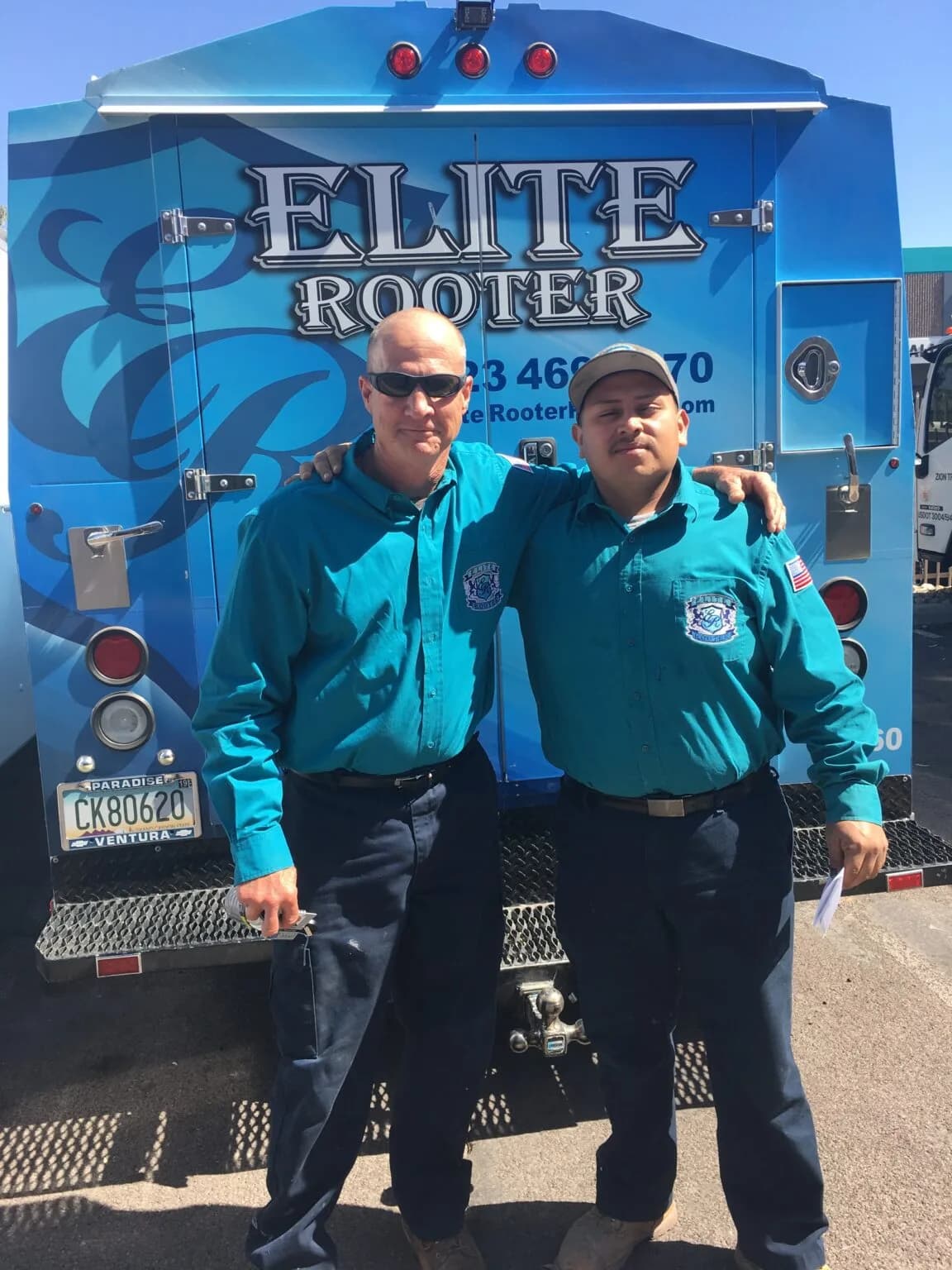
Sierra Air Conditioning & Plumbing is a useful public example of the operating layer. The Sierra case study ties public Google review growth to dated proof and AI visibility checks. Elite Rooter shows the plumbing version: 12 active markets and AI visibility checks across market-prompt pairs. Those are not generic ranking reports. They are operating systems around local trust.
What the done-for-you model should own
A serious alternative to an SEO agency should own the weekly local visibility loop:
- Measure priority prompts and locations across AI and local search surfaces.
- Capture which sources are cited and which competitors are mentioned.
- Tie review generation to branches, employees, and service moments.
- Turn customer language and field proof into better location and service pages.
- Keep Business Profile, location pages, citations, reviews, and structured facts aligned.
- Assign every market miss to a real owner and retest after the fix.
This is where AI visibility tracking and review generation belong in the same conversation. AI visibility without frontline review work turns into a monitoring dashboard. Review generation without source tracking turns into a bigger review count that may not answer the buyer's next question.
The idea in one picture
Give the work one owner.
Compare who handles each part of local visibility—and who makes sure the parts work together.
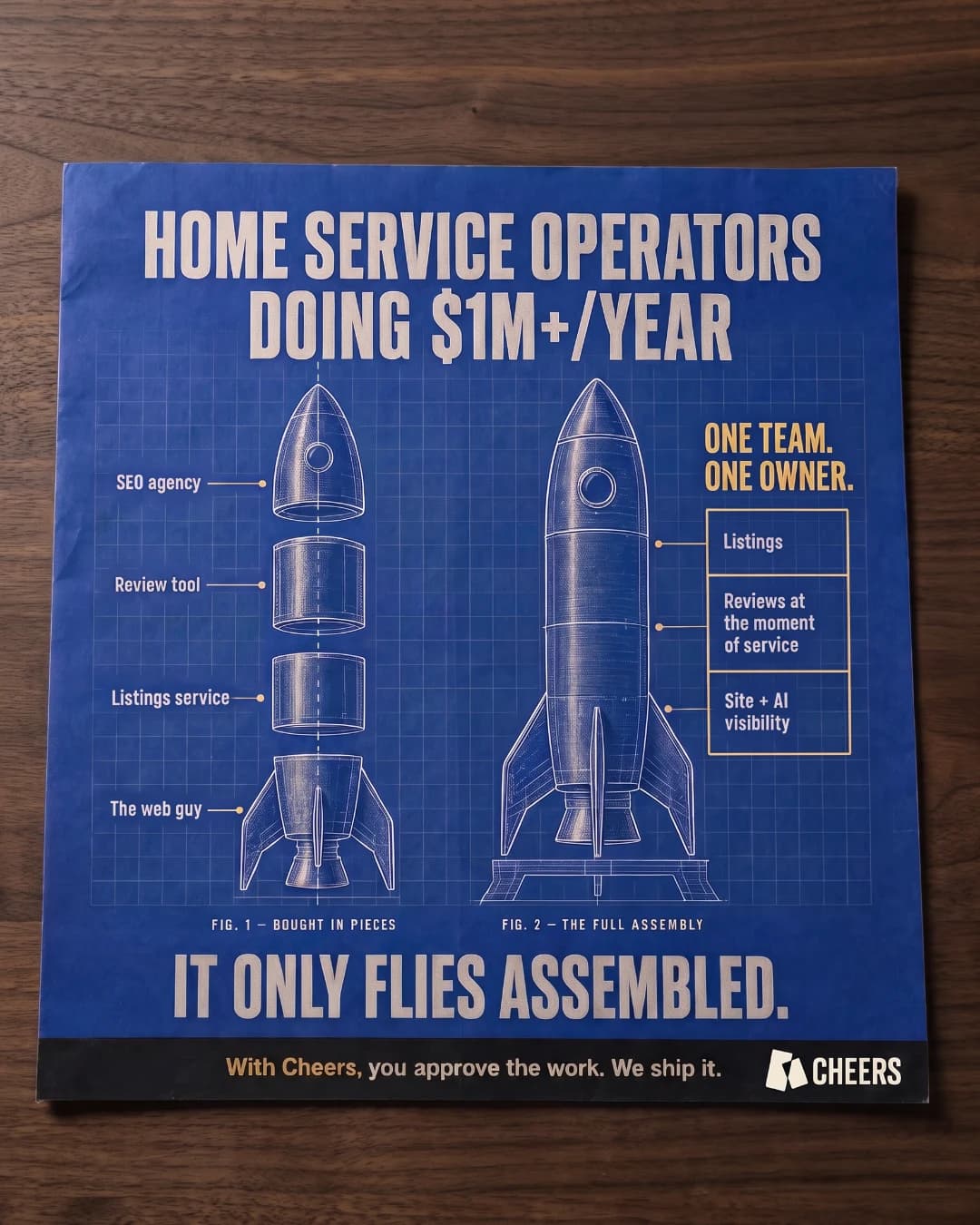
Home service operators doing $1M+ per year. Bought in pieces: SEO agency, review tool, listings service, the web guy. The full assembly: one team, one owner. Listings. Reviews at the moment of service. Site and AI visibility. It only flies assembled. With Cheers, you approve the work. We ship it.
How to decide what to buy
Start with the failure mode.
If the site is technically broken, hire technical help. If the location pages are thin, fix the page system. If profiles and citations are inconsistent, clean the source layer. If reviews are stale, build a field workflow. If AI answers mention competitors because they cite stronger third-party sources, track the source pattern before writing another blog post.
Then ask who can own the work every week. Agencies, internal teams, and software can all be part of the answer, but they should not hide the real owner. A local visibility program needs a cadence: inspect prompts and markets, identify the cited source gap, make the page or profile change, improve review capture, and check again.
If the decision is moving from retainer advice into tooling, use Best Local SEO Software for Multi-Location Service Businesses as the comparison layer.
For most multi-location service brands, the agency alternative is not cheaper content. It is tighter ownership. The right platform should make the work visible enough that marketing, operations, and local managers can act without waiting for the next retainer meeting.
Sources
- Do you need an SEO?. Google Search Central, last updated June 5, 2026. The service list, now including optimizing for generative AI, and the warning about aggressive or spam-policy-violating work. Checked September 2, 2026.
- Optimizing your website for generative AI features. Google Search Central, last updated July 2026. Checked September 2, 2026.
- Tips to improve your local ranking on Google. Google Business Profile Help, undated help page. Relevance, distance, prominence, and the review sentence. Checked September 2, 2026.
- Tips to get more reviews. Google Business Profile Help, undated help page. Checked September 2, 2026.
- Scorpion acquires 1SEO Digital Agency. Scorpion, June 18, 2026. Checked September 2, 2026.
- Scorpion home services and Scorpion RevenueMAX for home services. Scorpion, 2026. Checked September 2, 2026.
- 1SEO home services digital marketing. 1SEO, 2026. Checked September 2, 2026.
- CAMP Digital HVAC marketing. CAMP Digital, undated. AI and search optimization, paid search, websites, capacity marketing, and attribution. Checked September 2, 2026.
- RYNO digital marketing services and RYNO restoration marketing. RYNO Strategic Solutions, undated. Full-suite service mix. Checked September 2, 2026.
- AI visibility statistics and methodology. Cheers Research, September 2, 2026. Market Baseline citation pull: 32 prompts, 100 metros, four engines, 356,019 citations in the 28 days ending September 2, 2026.
Dylan Allen-Arnegård is the CEO & Co-Founder of Cheers, the done-for-you platform that manages the website, reviews, listings, structured data, and local content that get service businesses recommended across Google, Maps, ChatGPT, and Perplexity.